

Sparrow Control for Warehouses & Food Facilities
Passer domesticus
Invasive pest speciesThe house sparrow is an invasive pest species, and small enough to exploit the tiniest gaps, which makes it a persistent problem inside warehouses, feed stores and production areas. Once sparrows are nesting indoors, the contamination risk is immediate and continuous. Control depends on sealing entry points and excluding the birds with fine-mesh netting, gaps that stop a pigeon will not stop a sparrow.
BCS specifies sparrow proofing to the building, using the correct mesh and detailing so the exclusion is complete. Every job carries a written guarantee.
How to identify
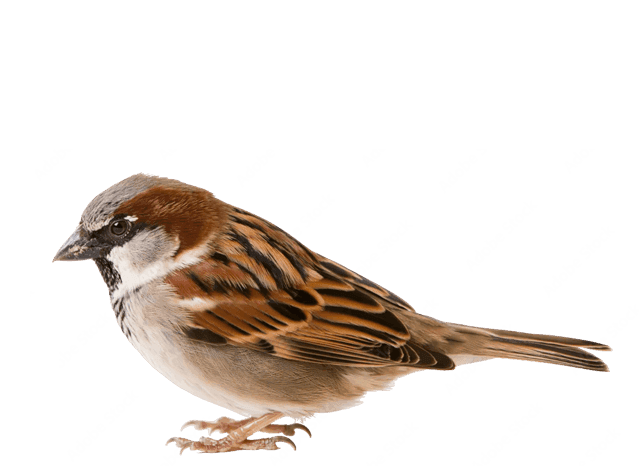
- Small, stocky brown bird; males have a grey crown and black throat bib.
- Exploits gaps as small as a few centimetres around cladding, louvres and service penetrations.
- Nests inside warehouses, feed stores and production areas, not just on the outside.
- Chirping colonies and small, scattered droppings across internal surfaces.
Why sparrows are a commercial risk
Because sparrows nest inside the building envelope, their droppings and nesting material land directly on stock, packaging and production lines. For food and feed operations this is a serious contamination and audit risk.
Their small size is the core challenge: standard proofing designed for pigeons leaves gaps a sparrow will find. Effective control requires fine-mesh exclusion and meticulous sealing of entry points.
For commercial and industrial operators the specific damage is costly. Sparrows nesting over production lines are a critical HACCP and ISO 22000 non-conformance, contaminating open product and packaging with droppings and feathers. Nesting material packed into electrical panels, light fittings, roof voids and machinery is a genuine fire and breakdown risk, and because sparrows feed directly on stored grain, feed and ingredients, an infestation also drives measurable stock loss and spoilage.
Internal contamination
Nesting inside the envelope puts droppings and debris directly onto product and packaging lines.
Exploitation of small gaps
Sparrows enter through openings that stop larger birds, so proofing must be detailed and complete to work.
Fire and breakdown risk
Nesting material in electrical panels, light fittings and machinery is a fire hazard and a cause of equipment failure.
Stock loss
Sparrows feed on stored grain, feed and ingredients, so an infestation directly consumes and spoils product.
The health hazards of sparrows
Bird droppings, feathers and nesting debris are a genuine health hazard, not just a mess. As droppings dry they break down into dust that becomes airborne and is inhaled, while fresh fouling contaminates surfaces, food and water, and the nests carry biting parasites. The specific conditions associated with this species:
Salmonellosis & E. coli
Sparrows nesting over production and storage areas shed Salmonella and E. coli directly onto product, packaging and surfaces, a direct food-poisoning and contamination risk.
Campylobacter
A common cause of bacterial gastroenteritis carried in bird droppings and readily transferred to food-contact surfaces.
Psittacosis (ornithosis)
Sparrows can carry Chlamydia psittaci, transmitted to people through inhaled dust from dried droppings, causing flu-like illness and pneumonia.
Bird mites
Because sparrows nest inside the building envelope, the mites from their nests migrate into work areas and bite staff, a frequent and under-recognised complaint.
Allergens and asthma triggers
Feathers, droppings and nest debris break down into fine dust that aggravates asthma and allergies for people working nearby.
Left unattended, sparrows multiply
House sparrows are among the fastest-breeding pest birds, raising several broods a year, so a small ingress becomes an entrenched internal colony quickly.
Short incubation, large clutches and multiple broods mean sparrow numbers rise steeply. A handful of birds nesting in a roof void this season is a colony next season, which is why sealing the entry points early matters.
One untreated pair, three years on
Illustrative growth of a single untreated breeding pair, with no control.
Numbers are illustrative and vary by site, the point is the shape. Bird populations compound, they do not plateau.
Recommended control for sparrows
Specified to your site after a survey. Most jobs combine more than one of these systems.
Sparrows questions, answered
Sparrows exploit very small openings, gaps around cladding, louvres, roller doors and service penetrations that are too small to stop a pigeon. Effective control means finding and sealing those specific entry points and excluding the birds with fine-mesh netting.
More species we control
Get rid of sparrows for good
Book a free site survey and we'll scope a guaranteed, humane solution for your facility.