Pigeon Control for Commercial & Industrial Sites
Columba livia domestica
Invasive pest speciesThe feral pigeon is an invasive pest species and the number-one commercial bird problem in South Africa. It is resident, intensely site-loyal and quick to re-colonise, which is why casual scaring never works. Effective pigeon control means physically removing access to roosting and nesting points, either with a tactile repellent gel on ledges and beams, or with exclusion netting across larger voids.
BCS has specialised in guaranteed pigeon proofing since 1987. Every job starts with a survey and ends with a written, multi-year guarantee, so the birds are gone for good, not just moved along.
How to identify
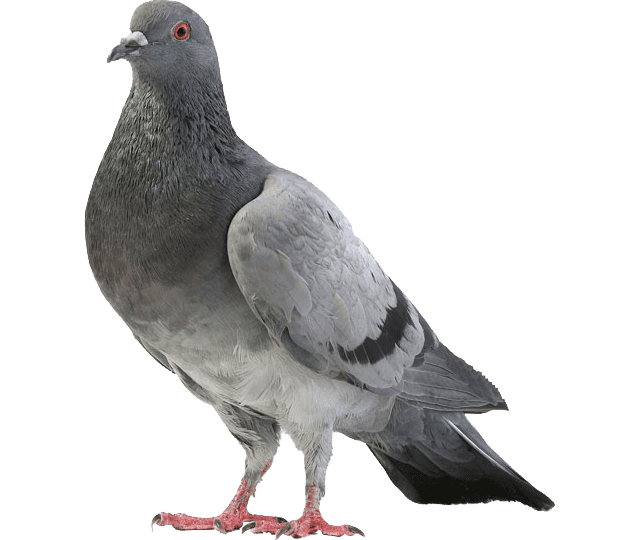
- Grey body with two dark wing bars and a variable white or iridescent neck.
- Roosts and nests on ledges, under eaves, in roof voids and on structural steel.
- Site-loyal, once a flock is established it returns to the same building year-round.
- Heavy, corrosive droppings accumulating in defined 'splash' zones below roosts.
Why pigeons are a commercial risk
Pigeon droppings are acidic and carry pathogens including Salmonella and E. coli. On a food, pharmaceutical or warehousing site that is a direct contamination risk and a common cause of failed hygiene audits.
Beyond hygiene, droppings corrode steel and cladding, block gutters and downpipes, and create slip hazards on walkways and loading areas. Nesting material is also a fire and drainage risk.
In an industrial setting the damage compounds. Uric acid in the droppings eats into structural steel, roof sheeting and paint systems, shortening asset life; nesting debris blocks box gutters, downpipes and roof drains, driving water ingress; and fouled walkways, gantries, ladders and platforms become documented OHS slip hazards. Pigeons also colonise solar arrays, HVAC intakes, extraction fans and electrical housings, adding unplanned maintenance, contamination and downtime.
Product and surface contamination
Droppings and feathers foul stock, equipment and working surfaces, a critical issue for any certified operation.
Structural corrosion and blockages
Acidic droppings degrade steel and paint; nesting debris blocks gutters and drains, driving up maintenance spend.
OHS hazards and downtime
Fouled walkways and gantries are a slip hazard, and blocked solar panels, intakes and equipment force unplanned shutdowns and cleaning.
Audit and reputational exposure
Visible bird activity and fouling are among the fastest ways to lose points in a food-safety or housekeeping audit.
The health hazards of pigeons
Bird droppings, feathers and nesting debris are a genuine health hazard, not just a mess. As droppings dry they break down into dust that becomes airborne and is inhaled, while fresh fouling contaminates surfaces, food and water, and the nests carry biting parasites. The specific conditions associated with this species:
Cryptococcosis
A fungal infection (Cryptococcus neoformans) that thrives in accumulated pigeon droppings. Inhaled spores can cause serious lung infection and meningitis, and are especially dangerous for people with weakened immune systems.
Histoplasmosis
A respiratory disease caused by a fungus (Histoplasma capsulatum) that grows in dried droppings. Disturbing old deposits during cleaning or maintenance releases spores that are then inhaled.
Psittacosis (ornithosis)
A bacterial infection (Chlamydia psittaci) passed from birds to people, causing flu-like illness and pneumonia. Pigeons are a common carrier.
Salmonellosis & E. coli
Bacteria shed in droppings contaminate food, water and surfaces, causing gastrointestinal illness, a critical risk anywhere food is handled.
Bird fancier's lung
An allergic lung condition (hypersensitivity pneumonitis) triggered by long-term exposure to airborne feather and dropping dust.
Ticks, mites and fleas
Pigeon nests harbour ticks, bird mites and fleas that bite people, often moving indoors and onto staff once the birds are disturbed or removed.
Left unattended, pigeons multiply
Feral pigeons breed year-round in South Africa's mild climate, which is exactly why an untreated infestation never settles, it compounds.
Because pigeons breed continuously and their young reach breeding age within months, numbers do not plateau on their own. A single pair, left alone, becomes a colony, and the longer it is left, the steeper the curve gets.
One untreated pair, three years on
Illustrative growth of a single untreated breeding pair, with no control.
Numbers are illustrative and vary by site, the point is the shape. Bird populations compound, they do not plateau.
Recommended control for pigeons
Specified to your site after a survey. Most jobs combine more than one of these systems.
Pigeons questions, answered
Permanent pigeon control means denying them access to their roosting and nesting points, not scaring them. On ledges and beams a tactile repellent gel is highly effective; large voids are sealed with exclusion netting. BCS surveys the site, specifies the right combination and backs it with a multi-year guarantee, so the birds do not simply return.
More species we control
Get rid of pigeons for good
Book a free site survey and we'll scope a guaranteed, humane solution for your facility.