

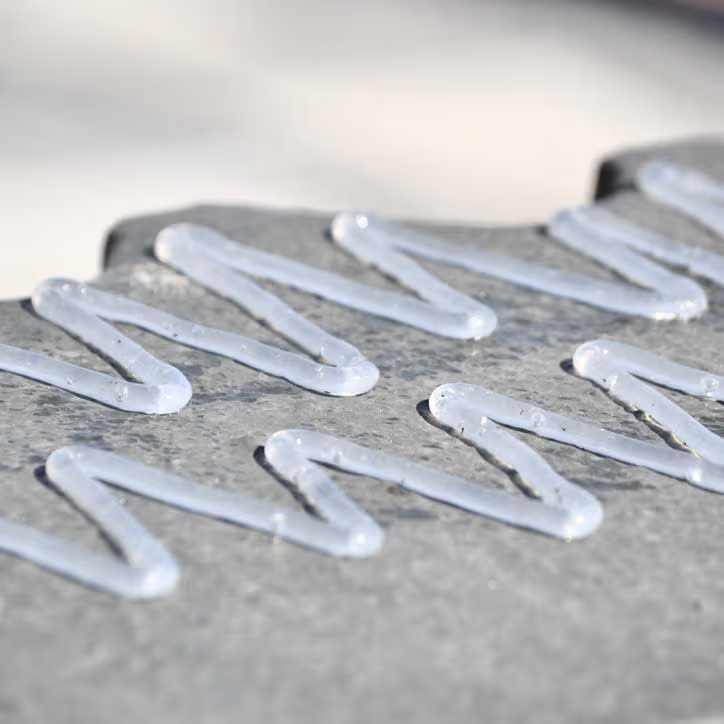
Most bird repellent gels on the market are sold as a one-step job: lay a bead, walk away. It looks identical to what BCS installs on day one. The difference shows up in year three, when the cheap installation has stopped working and ours is still going.
What actually kills a gel installation
A repellent gel works because birds don't like the feel of it. That tactile response is the whole mechanism. Anything that puts a dry, walkable crust between the bird's foot and the live gel underneath defeats it.
In the real world, that crust builds fast:
- Dust settles on the tacky surface and bonds to it.
- Feathers and debris stick to the bead and mat over it.
- UV and heat skin the surface over time.
A single-step gel has nothing protecting it from any of this. Within six months, faster in a dusty industrial environment, the bead is capped over, birds walk on it comfortably, and you're back where you started.
The second step
The BCS Vamoose system adds a step competitors skip. After the gel bead is laid, we apply a coat of Vamoose Sealer over every side of it. That sealer is a thin, durable barrier that keeps dust, feathers and debris off the gel underneath, so the active surface stays active.
That one extra step is the entire reason our installations last up to 5 years, where single-step gels stop working within six months.
Why that maths matters
If you're comparing two quotes and one is cheaper, look at the lifespan, not the day-one price. A single-step gel that needs redoing every six months costs you repeated re-installations over the years a single BCS installation covers, plus the cleaning, the disruption, and the risk exposure every time the protection lapses.
Proofing is only cheaper than cleaning if the proofing lasts. The sealer is what makes it last.
Want to know how long a Vamoose installation would last on your specific site? Book a free site survey and we'll scope it.